
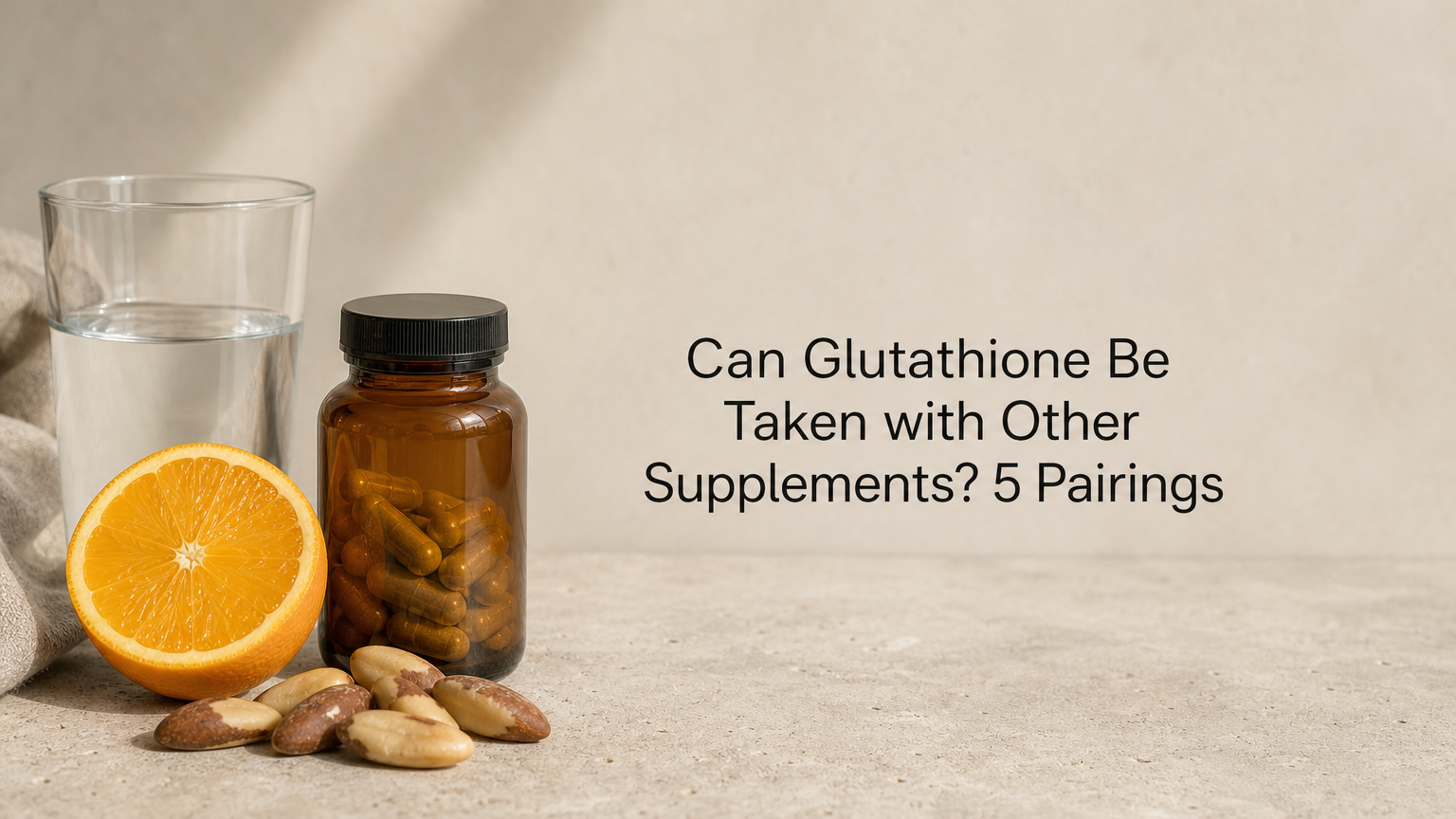
Can glutathione be taken with other supplements? In most cases, yes. Vitamin C, NAC, selenium and alpha-lipoic acid all support glutathione and are generally fine to take alongside it. Iron needs spacing, and alcohol, acetaminophen and some prescriptions deserve a closer look. Vitamin C suits almost everyone. NAC suits readers who want to raise levels from the inside. Selenium and alpha-lipoic acid suit people building a fuller antioxidant routine. Anyone on medication should check with a clinician first.
The problem is that supplement labels promise “synergy” while forums warn about everything from coffee to multivitamins. Research on glutathione interactions is thin, so confident claims in either direction should make you cautious. You want to know which combinations help, which ones waste money, and which ones carry real risk.
This guide ranks five pairings by how clearly the evidence supports them. Each one gets a verdict, a plain explanation of why it matters, and practical timing. Beneve formulates a glutathione supplement, so we wrote this as the guide we would want before stacking anything. It is general education, not medical advice.
1. Vitamin C: take it together
Verdict
Vitamin C is the best-supported partner for glutathione, and the two are safe to take at the same time at normal doses.

- Status: safe together
- Timing: no need to separate them
Why it matters
Vitamin C and glutathione recycle each other. When glutathione neutralizes a free radical, it becomes oxidized, and vitamin C helps convert it back to its active form. A 2023 review of the two nutrients describes their antioxidant roles as deeply interconnected.
Food counts here too. Citrus, bell peppers, strawberries and kiwi all supply vitamin C from food, and they cost less than a mega-dose capsule.
Vitamin C does not just sit next to glutathione, it helps keep glutathione working.
How to take it
Stay at a moderate dose. The adult upper limit for total vitamin C intake is 2,000 mg a day, and most people never need to approach it. The amount on a standard supplement label is enough for this pairing.
2. NAC: a precursor you can stack
Verdict
NAC is safe to combine with glutathione, but it is optional. It works by a different route, so you may not need both.
- Status: safe together
- Timing: can be taken at the same time
Why it matters
NAC supplies cysteine, the amino acid that limits how fast your body makes its own glutathione. Glutathione itself is built from cysteine, glutamate and glycine. NAC and glutathione are not the same substance, and NAC does not raise levels in every person.
Pairing them makes sense when you want both a direct source and a building block. Food backs this up. Eggs, garlic, onions and broccoli provide sulfur-rich nutrients your body uses to build glutathione.
Glutathione gives you the finished antioxidant, while NAC gives your body the raw material to make more.
How to take it
Take NAC with a meal if it upsets your stomach. Some people notice a sulfur smell or mild nausea. Follow the label dose, and skip NAC if you only want the simplest routine.
3. Selenium and alpha-lipoic acid: take together
Verdict
Both are widely used with glutathione, and neither needs to be separated from it.

- Status: safe together at label doses
- Timing: any time, ideally with food
Why it matters
Selenium is a required cofactor for glutathione peroxidase, the enzyme family that uses glutathione to neutralize peroxides. Without enough selenium, that system runs short.
Alpha-lipoic acid is a separate antioxidant that supports glutathione status and helps regenerate other antioxidants. Brazil nuts and sardines are strong selenium food sources. Brazil nuts are so rich in selenium that you do not need many.
Selenium keeps the glutathione enzyme system running, and alpha-lipoic acid adds backup.
How to take it
Keep selenium under the adult upper limit of 400 mcg a day from all sources. Alpha-lipoic acid can lower blood sugar, so people on diabetes medication should ask their clinician before adding it.
4. Iron: space it out
Verdict
Iron is the one common supplement worth separating from glutathione, so give each a different part of the day.

- Status: compatible with spacing
- Timing: about four to six hours apart
Why it matters
At high doses, iron can act as a pro-oxidant in the gut. Practitioners worry that taking it in the same moment as an oral antioxidant may oxidize the antioxidant before it is absorbed. The evidence is limited, but a gap costs you nothing.
Never skip prescribed iron because of a glutathione routine. If you have anemia, the iron comes first, and you simply schedule glutathione around it.
If you take iron, move it to a different part of the day instead of dropping it.
How to take it
Many people take oral glutathione on an empty stomach with water, about 30 minutes before food. No firm evidence names one best time of day, so consistency matters most. Here is a sample day:
| Time | What to take |
|---|---|
| Morning, empty stomach | Glutathione with water, plus vitamin C |
| Lunch | NAC, selenium, alpha-lipoic acid with food |
| Late afternoon or evening | Iron, at least 4 to 6 hours after glutathione |
5. Medications and alcohol: check first
Verdict
Glutathione is generally well tolerated, but medications and alcohol are where you should stop and ask before combining anything.
- Status: depends on the drug
- Timing: confirm with a pharmacist or clinician
Why it matters
Drug references report few or no confirmed interactions, but the research is incomplete. Three situations stand out. Your body uses glutathione to process acetaminophen, and chronic high doses can exhaust it. Anyone in cancer treatment should get oncologist approval first, since antioxidants may interfere with some therapies. Heavy drinking lowers glutathione, so limit alcohol.
Coffee has no clear evidence of harm. Rare allergic reactions, such as hives or swelling, mean you should stop and seek help. WebMD notes it is unknown how glutathione affects pregnancy, and that it passes into breast milk.
A supplement being natural does not make it interaction-free, so a quick pharmacist check is worth it.
How to take it
Bring your full medication and supplement list to a pharmacist or clinician. The FDA does not review dietary supplements for safety and effectiveness before sale, so choose products with clear labels and third-party testing.
The short version
Glutathione pairs well with vitamin C, NAC, selenium and alpha-lipoic acid. Iron needs a few hours of separation, and medications and alcohol need a conversation with a professional. Start with one change at a time so you can tell what helps, and keep your routine simple.
If you want a ready-made option, Beneve’s Glutathione + formula combines glutathione with DIM and Xanthohumol for cellular health and hormone support. Check any formula against the pairings above, and ask your clinician before adding it to a regimen.
Leave a Reply