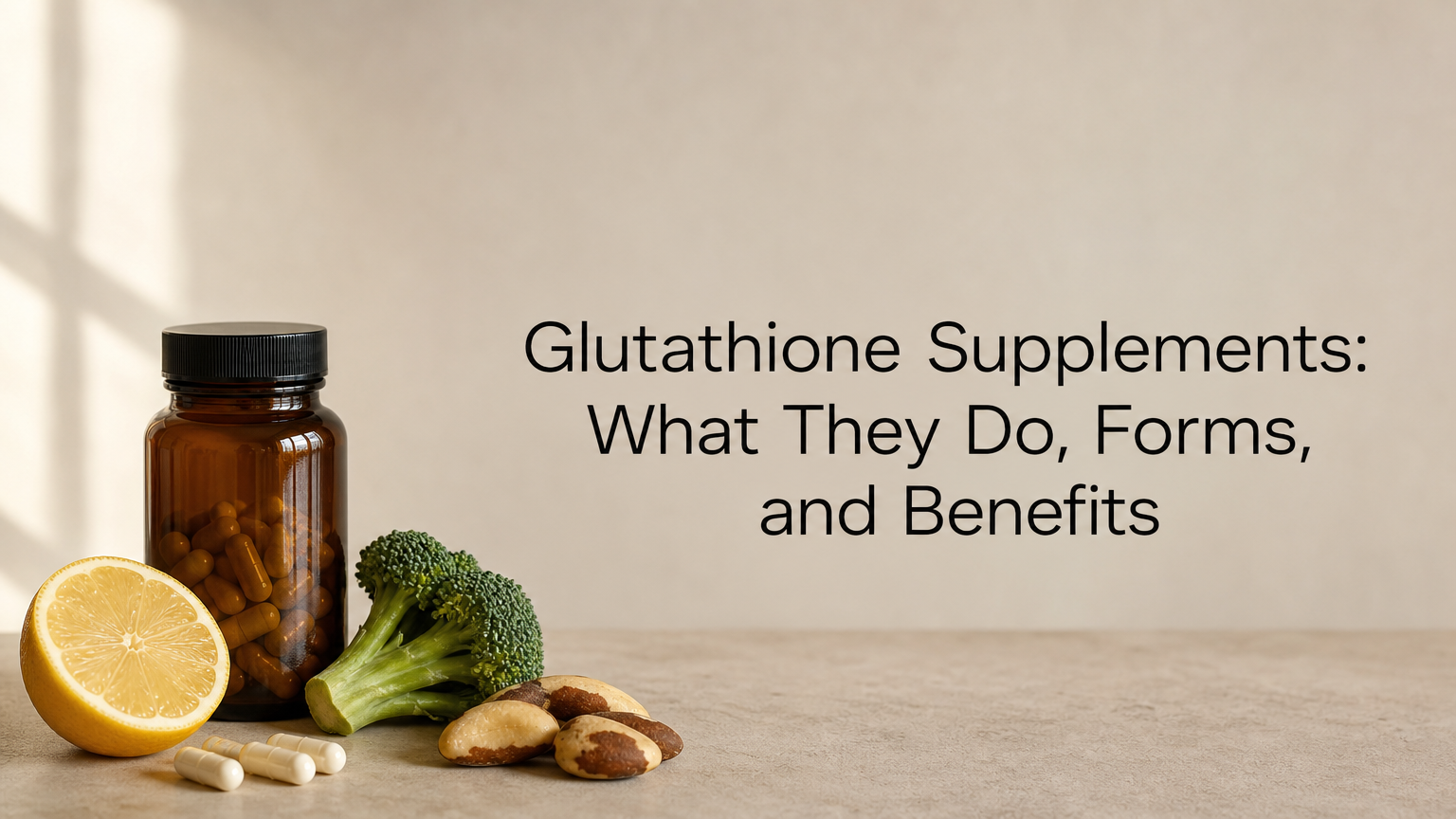
Your body makes its own glutathione, but production drops with age, stress, poor sleep, and heavy exposure to toxins. That is why a glutathione food supplement looks appealing. The shelf is crowded, though. Capsules, liposomal liquids, sublingual sprays, and precursors like NAC all promise the same thing, and the labels rarely explain how they differ.
Here is the short answer. Glutathione supplements can support your antioxidant defenses and detox pathways, but not every form works equally well. Standard oral glutathione is partly broken down in digestion. Liposomal forms and precursors such as NAC, glycine, and selenium-supported blends tend to raise levels more reliably. Food and lifestyle habits matter too.
Below, you will learn what glutathione does in the body, the main benefits people look for, and possible side effects. We also compare each form side by side. At Beneve, we favor simple, science-backed formulas, so we focus on what the evidence supports, and help you decide what is worth taking.
Why glutathione supplements matter
What glutathione does in your body
Glutathione is a small molecule built from three amino acids: glutamate, cysteine, and glycine. Nearly every cell makes it, and the liver makes the most. People call it the master antioxidant because it handles several jobs at once:

- Neutralizes free radicals before they damage cell membranes and DNA
- Recycles vitamins C and E so they keep working
- Binds to toxins and drug byproducts in the liver so you can excrete them
- Supports immune cells, which rely on it to multiply and respond
Why levels fall short
Production depends on raw materials, and cysteine is the limiting one. If you eat too little protein or sulfur-rich food, your cells have less to build with. Age adds to the problem. Studies of older adults report lower glutathione levels than in younger people, and chronic stress, heavy drinking, smoking, and air pollution all use it up faster.
That gap is why a glutathione supplement gets so much attention. Supplements with glutathione, or with its building blocks, aim to restore supply when demand outpaces what your body can make. They cannot make up for poor sleep or a thin diet, though.
A glutathione supplement works best as support for good habits, not a substitute for them.
People over 40, hard-training athletes, and anyone with regular alcohol or toxin exposure are the groups most likely to benefit. Which form suits you depends mostly on how well it absorbs, which we compare below.
What the research says about benefits
Where the evidence is strongest
Human trials show that oral glutathione can raise blood levels. In a six-month study, 1,000 mg daily lifted levels by roughly 30 to 35% and also increased natural killer cell activity. Those are the benefits of a glutathione supplement with the best backing.
NAC has the firmest clinical footing. Hospitals use it to treat acetaminophen overdose because it replenishes liver glutathione fast. Smaller trials link it to better antioxidant status in people with high oxidative stress.
Where the evidence is thin
Claims about skin lightening, anti-aging, and athletic performance rest on small, short studies. Results are mixed, and long-term data are limited, so treat bold marketing with caution.
Response also varies. People who start low, such as older adults or heavy drinkers, tend to see bigger gains than people who already eat well and sleep enough.
Glutathione supplements can raise your levels, but proof of dramatic results is still thin.
The practical takeaway is simple. Expect modest, measurable support for your antioxidant defenses, not a cure-all, and judge any product by its form and dose.
Forms of glutathione supplements compared
Not every glutathione dietary supplement is built the same. The form decides how much reaches your cells, so compare the options before you buy.
The main forms at a glance
Each option takes a different route to the same goal. Direct forms supply glutathione itself, while precursors give your body the materials to build its own.

| Form | How it works | Best for |
|---|---|---|
| Standard capsule | Reduced glutathione, partly broken down in the gut | Basic, budget support |
| Liposomal | Fat-wrapped to survive digestion | Better absorption |
| Sublingual or spray | Absorbed through mouth tissue | People who dislike capsules |
| NAC | Supplies cysteine, the limiting building block | Raising levels from within |
| Precursor blends | Glycine, selenium, vitamin C | Whole-pathway support |
Which form to lean toward
Liposomal products make the strongest case among direct forms, since the fat layer shields glutathione from stomach enzymes. Sublingual options look promising, but fewer trials exist.
The best form is the one that gets glutathione or its building blocks into your cells.
NAC is the most proven precursor, and it costs less. Many people pair it with glycine. Whichever supplement for glutathione you choose, check that the label lists reduced glutathione (GSH) and the dose per serving.
How to choose and use a glutathione supplement
What to check before you buy
Start with the label. A good glutathione food supplement lists the exact form and dose per serving, not a vague proprietary blend. Run through this checklist:
- Reduced glutathione (GSH), clearly named
- Liposomal delivery if you want a direct form
- Third-party testing from USP or NSF
- Few fillers and no artificial dyes
How to take it
Most trials used 250 to 1,000 mg of glutathione daily, while NAC is commonly taken at 600 mg daily. Begin at the low end. Take direct forms on an empty stomach, and take NAC with food if it bothers your stomach.
Give it eight to twelve weeks before you judge glutathione supplement benefits, because levels build gradually. Track your sleep, energy, and recovery so you have something real to compare. If you are pregnant, nursing, or on medication, check with your doctor first.
Pick a clear label, start low, and give it two to three months.
Side effects, risks, and food-first alternatives
What to watch for
Most people tolerate glutathione well. When problems appear, they are usually mild digestive upset, such as bloating, cramps, or loose stools. NAC can also cause nausea and a sulfur-like odor. Rare rashes and allergic reactions happen too.
Skip injectable or IV products sold for skin lightening. They carry infection risk and little long-term safety data. If you have asthma, take prescription drugs, or manage a chronic condition, ask your doctor first before adding any glutathione supplement.
Food-first ways to raise glutathione
Food builds the base, and it costs less. Eat sulfur-rich vegetables and quality protein so your body has cysteine to work with, then add the nutrients that keep the pathway running:

- Garlic, onions, broccoli, and kale for sulfur compounds
- Eggs, fish, poultry, or whey for cysteine and glycine
- Brazil nuts (one or two a day) or sardines for selenium
- Citrus and bell peppers for vitamin C
Build your levels with food first, then use supplements to fill the gaps.
What to take away
A glutathione food supplement can give your antioxidant defenses modest, measurable support, especially if you are over 40, train hard, or drink alcohol often. The form matters most. Liposomal glutathione and NAC have the strongest case, while standard capsules lose a good share in digestion.
Food and habits still come first. Sulfur-rich vegetables, quality protein, and good sleep build the base, and a supplement fills the gaps. Start low, check the label for reduced glutathione (GSH), and give it eight to twelve weeks before you judge results. Talk to your doctor if you take medication.
If you want an antioxidant glutathione supplement without the guesswork, try Beneve’s Glutathione +. It pairs glutathione with DIM and xanthohumol for cellular and hormone support.
Leave a Reply